2mins read
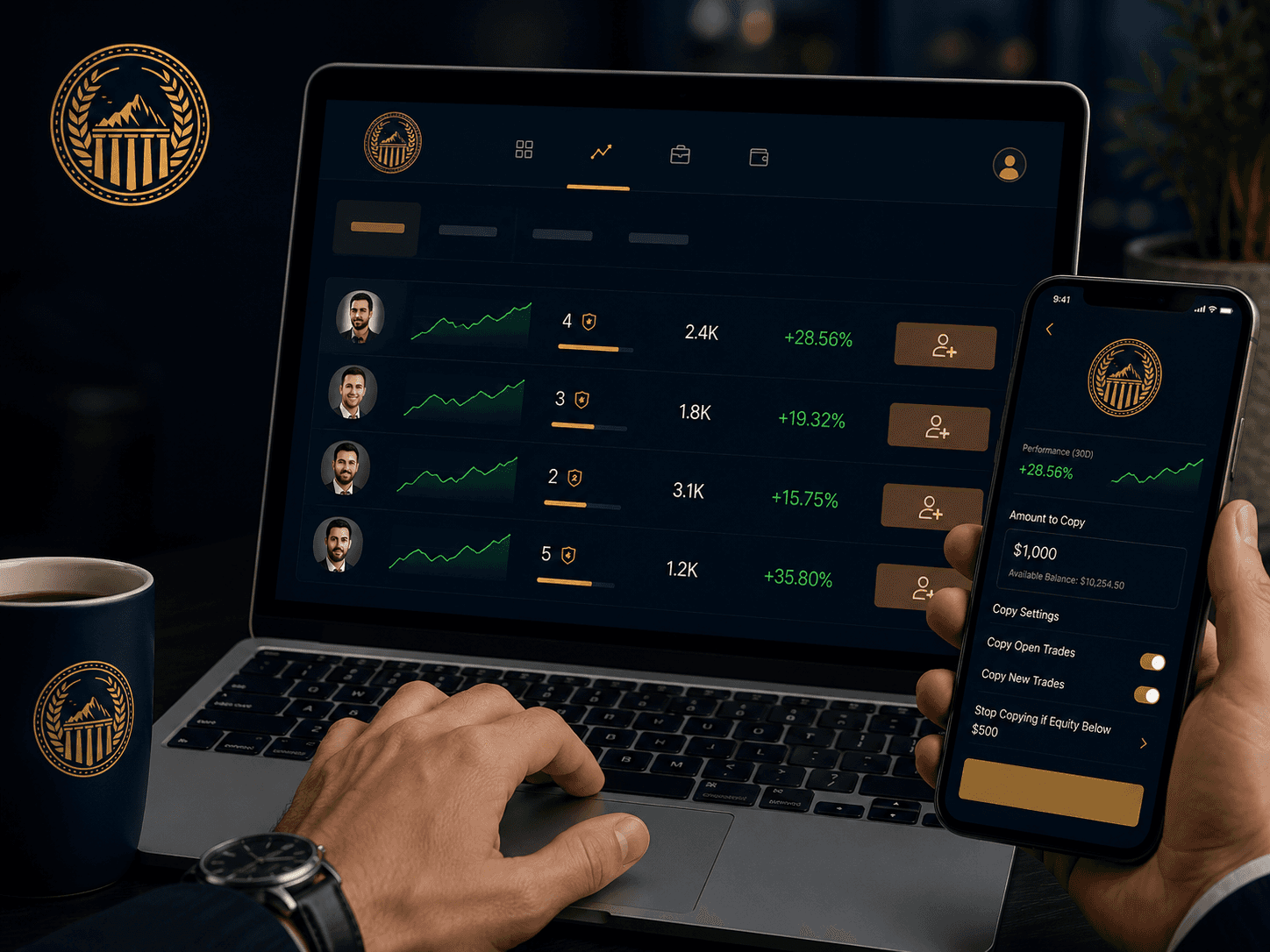
Copy trading lets you automatically replicate the trades of experienced, verified forex traders in real time — without needing to know how to read a chart, interpret a central bank statement, or calculate a position size. For millions of people worldwide, it's become the entry point into forex markets. But copy trading is not a passive income switch you flip and forget. Like any form of market participation, it comes with real risks, important decisions, and things you must understand before you commit capital. This guide covers everything a beginner needs to know - honestly, thoroughly, and without the hype. If you're completely new to the forex market, we'd recommend first reading our introduction to forex trading basics on the Olympus Capital FX learning centre to build the foundational context that will make this guide more valuable.
1. What Is Copy Trading? A Clear Definition
Copy trading is a form of social trading in which one trader's account automatically mirrors the live trades of another trader — in the same direction, and proportional to the amount allocated. When the signal provider (the trader being copied) opens a EUR/USD buy position risking 1% of their capital, your account opens the same trade proportionally, automatically and instantly.
There is no delay, no manual intervention, and no need for you to monitor markets. The copy relationship is live — meaning entries, exits, stop losses, take profits, and position modifications all mirror the signal provider in real time.
Copy trading sits within the broader category of managed forex solutions — alongside PAMM accounts — that allow investors to participate in forex markets without direct trading involvement. For a deeper look at how these two options compare, read our dedicated breakdown: PAMM Account vs Copy Trading: Which Is Better for Passive Income in Forex?.
2. How Does Copy Trading Actually Work? Step by Step
The mechanics of copy trading are straightforward once you understand the flow. Here's exactly how it works from the moment you decide to copy a trader:
1. Choose a broker with copy trading: Not all forex brokers offer copy trading infrastructure. You need a broker that either runs its own copy trading ecosystem or integrates with a social trading network.
2. Browse signal providers: The platform displays verified trader profiles — complete with performance history, win rate, drawdown statistics, trading style, instruments traded, and risk score.
3. Select a trader to copy: You choose which signal provider to copy and how much capital to allocate. This allocation is then proportionally mirrored across every trade the provider takes.
4. The system executes automatically: From this point, every trade opened by the signal provider is replicated in your account in real time — entries, exits, stop losses, and take profits.
5. Monitor and manage your portfolio: You retain full visibility and control. You can pause, adjust allocation, or stop copying a provider at any time.
6. Profits and losses flow to your account: Results are credited or debited from your account proportionally to the signal provider's performance on your allocated capital.
For a comprehensive breakdown of the mechanics and nuances of the copy trading relationship, read our dedicated guide: Copy Trading Explained: How It Works and Who It's For.
3. Copy Trading vs Manual Trading: Key Differences
Understanding what copy trading is also means understanding what it isn't. Here's how it compares to manual, self-directed forex trading:
TIME COMMITMENT Manual trading requires constant chart monitoring. Copy trading requires periodic portfolio review.
SKILL REQUIRED Manual trading demands deep technical and fundamental knowledge. Copy trading requires due diligence in selecting providers.
CONTROL Manual traders control every decision. Copy traders delegate execution while retaining account ownership and withdrawal rights.
LEARNING CURVE Manual trading has a steep learning curve measured in months or years. Copy trading has a moderate learning curve around provider selection and risk settings.
RISK Both involve market risk. Manual traders bear risk from their own decisions. Copy traders bear risk from provider decisions plus provider selection risk.
Neither approach is inherently superior. The right choice depends on your time, knowledge level, and investment goals. Many experienced traders use copy trading as one component of a diversified forex approach — running their own manual strategies alongside copied positions for diversification.
4. What to Look for in a Signal Provider
This is where most beginners go wrong. They see a trader with impressive recent returns — 40% in the last month — and immediately allocate capital without looking deeper. That single number tells you almost nothing useful and can actually be a warning sign of excessive risk-taking.
Here are the metrics that actually matter when evaluating a signal provider:
Track Record Length
Anything under six months of verified live trading history is insufficient. Markets cycle through different conditions — trending, ranging, high volatility, low volatility, risk-on, risk-off. You need to see how a provider performs across multiple market environments, not just in one favourable period.
Maximum Drawdown
Maximum drawdown is the largest peak-to-trough decline in the account's history. It tells you the worst-case scenario you'd have experienced as a copier. A provider with 30% annual returns but a 45% maximum drawdown is taking risks that could devastate your capital. Look for providers whose maximum drawdown is proportionate and acceptable relative to their returns — typically under 20% for conservative strategies.
Consistency Over Spikes
A steady monthly return of 3–5% over 18 months is far more valuable than one month of 60% followed by erratic results. Consistency signals disciplined risk management — one of the core markers of a professional trader.
Risk Score and Position Sizing
Check whether the provider uses appropriate position sizing and leverage. High leverage positions that generate large short-term returns are unsustainable and will eventually lead to significant drawdowns. The risk management principles that apply to manual trading — explored in our guide on risk management for gold traders — apply equally to evaluating signal providers.
Instruments and Style
Understand what the provider actually trades — major currency pairs, exotic crosses, gold, indices — and whether their trading style (scalping, day trading, swing trading) aligns with your risk tolerance and capital requirements. A scalper opening 30 trades a day with tight stops behaves very differently from a swing trader holding positions for days.
5. The Real Risks of Copy Trading (What Platforms Won't Always Tell You)
Copy trading platforms market their services with impressive performance charts and user-friendly interfaces. They are less prominent in highlighting the very real risks involved. As an informed beginner, you need to understand all of them.
⚠ Risk 1 — Past Performance Is Not Future Results: A signal provider's historical returns, however impressive, provide no guarantee of future performance. Markets change. Strategies that worked in low-volatility trending conditions may fail badly in choppy, news-driven environments.
⚠ Risk 2 — Provider Risk: Human Error and Strategy Drift: The person you're copying is a human trader. They can have bad months, change their strategy, increase risk levels after losses (revenge trading), or simply stop performing. You bear the consequences of their decisions in real time.
⚠ Risk 3 — Slippage and Execution Differences: In fast-moving markets, the price at which your copy trade executes may differ slightly from the signal provider's entry — particularly with large follower bases or during high-impact news events. Over many trades, this slippage can meaningfully impact returns.
⚠ Risk 4 — Over-Allocation: Allocating too large a proportion of your capital to a single provider — or to copy trading as a whole — is one of the most common beginner mistakes. Diversify across multiple providers and strategies, and never allocate capital you cannot afford to lose entirely.
⚠ Risk 5 — Platform and Broker Risk: The safety of your funds depends on the broker running the copy trading infrastructure. A regulated, transparent broker with segregated client funds is non-negotiable. For guidance on evaluating broker safety, read our post:
Is Olympus Capital FX Safe? Regulation, Funds & Security Explained — essential reading before entrusting any capital to a forex broker.
Understanding the broader risk landscape of forex is also critical. Our post on why most people lose money in forex covers the systemic mistakes that affect both manual and copy traders alike.
6. Copy Trading vs PAMM Accounts: Which Is Right for You?
Both copy trading and PAMM (Percentage Allocation Management Module) accounts allow investors to benefit from the expertise of professional traders without trading themselves. But they work differently, with different levels of transparency, control, and risk profile.
In a PAMM account, your capital is pooled with other investors into a single account managed by a master trader. Profits and losses are distributed proportionally across all investors. You don't see individual trades in real time — you see account-level performance.
In copy trading, your account remains entirely separate. You see every individual trade, can stop copying at any time, and have complete transparency over the positions being taken.
The choice depends on your priorities: PAMM accounts often suit investors who prefer a fund-like structure with less granular visibility. Copy trading suits those who want transparency, control, and the flexibility to manage multiple copied strategies simultaneously.
For a detailed, side-by-side analysis of both approaches, read our comprehensive guide: PAMM Account vs Copy Trading: Which Is Better for Passive Income in Forex? And for a standalone deep-dive into PAMM accounts, see: What Is a PAMM Account in Forex?.
7. How to Start Copy Trading: A Practical Checklist
If you've decided copy trading aligns with your goals and risk appetite, here is the step-by-step process to start correctly:
7. Define your investment goals and risk tolerance: Are you seeking capital growth or income? What drawdown percentage would cause you to stop? Know your parameters before you look at a single provider.
8. Choose a regulated broker: Ensure your broker is properly regulated with segregated client funds and a transparent operating structure. This is your first and most important protection.
9. Fund your account with only what you can afford to lose: Copy trading involves real market risk. Start with capital that, if lost entirely, would not materially impact your financial wellbeing.
10. Analyse at least 5–10 signal providers: Don't stop at one or two profiles. Compare track record length, maximum drawdown, consistency, risk score, and trading style across multiple candidates.
11. Diversify across 2–4 providers: Avoid concentrating all capital on a single trader. Spread across providers with different trading styles and instruments to reduce correlation risk.
12. Set a stop-loss allocation: Many platforms allow you to set a maximum loss threshold per provider — at which point copying automatically stops. Use this feature.
13. Monitor weekly, not daily: Checking results daily leads to emotional decision-making. Review provider performance weekly or monthly, giving sufficient time to evaluate meaningful trends.
14. Use the learning opportunity: Watching how professional traders operate — their entry timing, risk sizing, and reaction to market events — is a valuable education. Use it to develop your own market knowledge over time.
Speaking of platform tools: understanding MT5 — the platform most professional copy trading operates through — is genuinely useful for monitoring your copied positions. Our practical walkthrough How to Use MetaTrader 5 (MT5) will give you everything you need.
8. The Psychology of Copy Trading
Copy trading removes the burden of trade execution — but it doesn't remove the psychological challenges of investing. In some ways, it introduces new psychological pressures that beginners are not prepared for.
Impatience with Drawdowns
Even excellent traders experience drawdown periods that can last weeks or months. Beginners copying these traders often panic during the first significant dip and stop copying — right before the strategy recovers. This is one of the most destructive patterns in copy trading and mirrors the impatience that causes manual traders to abandon proven strategies prematurely.
Chasing Recent Performance
The recency bias — covered in depth in our post on probability and psychology in trading — is just as dangerous in copy trading as in manual trading. Choosing a signal provider because they had exceptional returns last month, without understanding the risk they took to generate those returns, is a common and costly mistake.
The Gambling Mindset
For some investors, copy trading becomes a vehicle for gambling-style behaviour — allocating large amounts to high-risk providers chasing maximum returns, switching providers frequently, and treating it as a game rather than a serious investment decision. This is exactly the mentality explored in our widely-read piece: How to Trade Forex Safely Without a Gambling Mindset — applicable to copy traders as much as manual traders.
9. Realistic Expectations: What Returns Can You Actually Expect?
This is where honest guidance matters most — because the gap between marketing and reality in copy trading is significant.
Top-tier, consistently performing signal providers on regulated platforms typically generate 10–25% annual returns with acceptable drawdown levels. Providers showing 50–100%+ annual returns are almost always taking disproportionate risks — risks that will eventually produce a corresponding drawdown or account wipeout.
The best way to benchmark realistic performance expectations is to look at what professional manual traders achieve. As covered in our blog on how professional traders manage risk, even experienced institutional traders target 15–30% annual returns — not 200% per year. A copy trading signal provider promising multiples of this is either extremely lucky or extremely reckless.
Key Expectation Check: Copy trading can be a legitimate, managed-risk approach to forex market participation. It is not a get-rich-quick mechanism. Treat it as you would any investment allocation: with due diligence, diversification, defined risk limits, and realistic return expectations.
Conclusion: Copy Trading Done Right Is a Genuine Opportunity
Copy trading, when approached with the right mindset and proper due diligence, is a genuinely accessible and potentially valuable way for beginners to participate in the forex market. It lowers the technical barrier to entry, provides exposure to professional-grade trading strategies, and allows you to grow your market knowledge while participating.
The key word is approached correctly. Copy trading without understanding provider selection, risk management, psychological discipline, and realistic expectations is not safer than manual trading — it just moves the source of potential error from trade execution to provider selection.
Do the work upfront. Select carefully. Diversify. Set risk limits. Monitor — but don't obsess. Use the experience to learn. And choose a broker whose infrastructure, regulation, and transparency give your capital the protection it deserves.
At Olympus Capital FX, we provide the professional trading infrastructure, regulated account options, and educational resources that give copy traders the foundation they need to participate in forex markets with confidence. Explore our full insights library for everything you need to trade smarter.
Related Articles
Forex Strategy
Aug 25, 2026
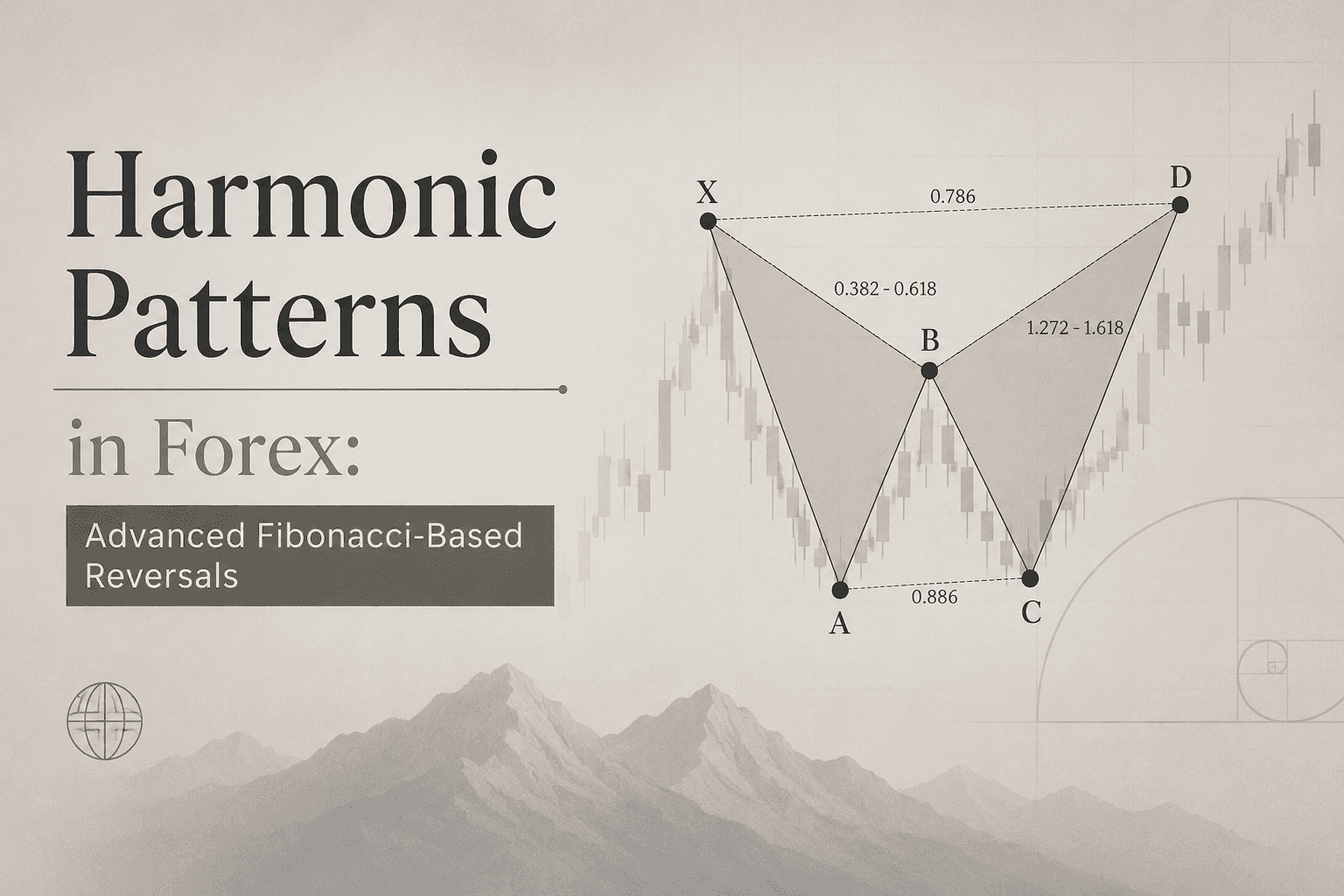
Harmonic Patterns in Forex: Advanced Fibonacci-Based Reversals

Forex Strategy
Aug 24, 2026
Candlestick Patterns in Forex: Read Price Action Like a Pro

Forex Strategy
Aug 21, 2026
Position Sizing & Money Management in Forex: Survive and Profit
Forex Trading Basic
Aug 21, 2026
Position Sizing & Money Management in Forex: Survive and Profit