2mins read
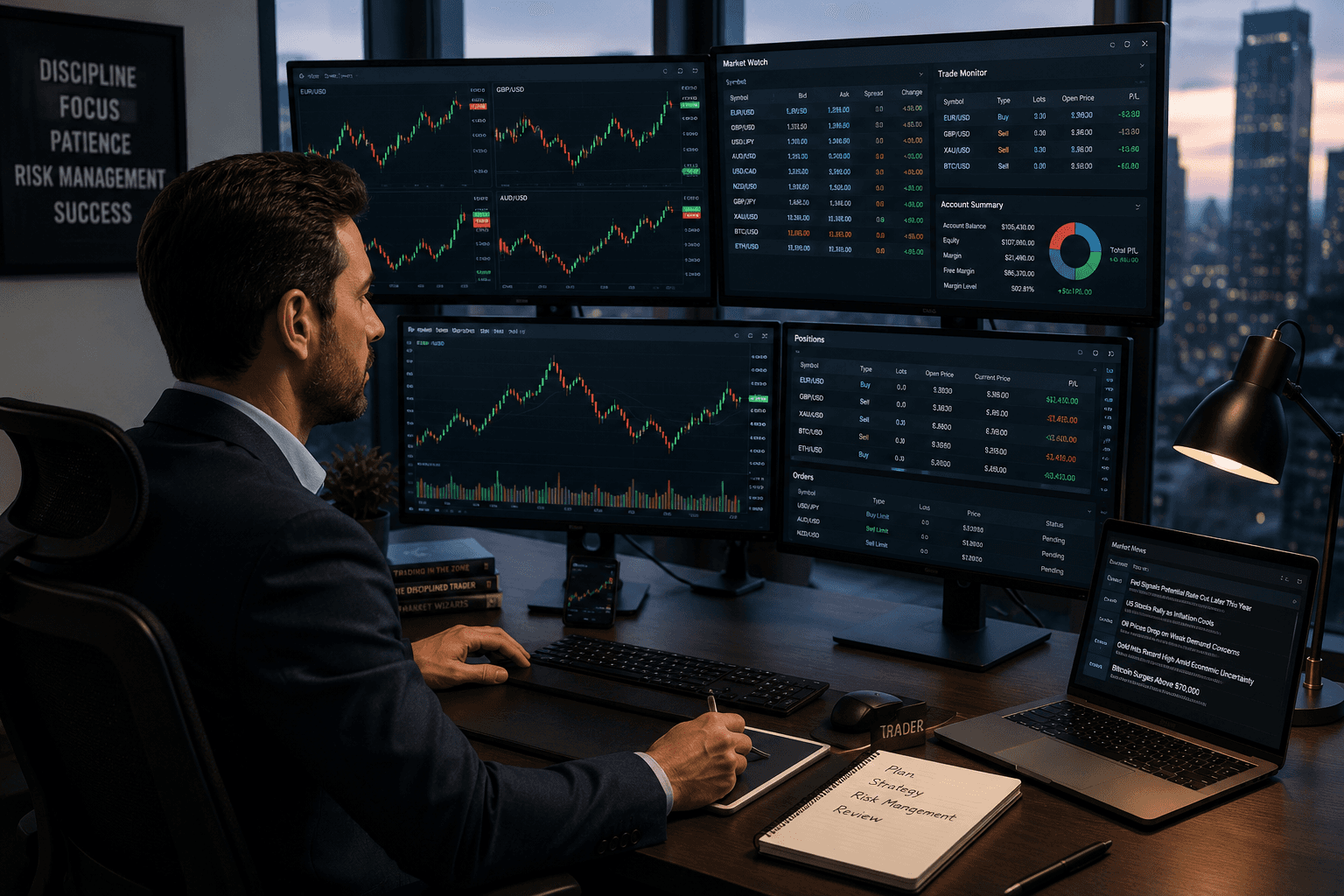
Every trader loses money at some point. That is not a flaw in the system — it is an inherent feature of markets that are uncertain, dynamic, and populated by some of the most sophisticated participants in the world. What separates the traders who build lasting, profitable careers from those who burn through their accounts in weeks or months is not superior intelligence, access to secret information, or even a dramatically better strategy. It comes down to a single, unglamorous discipline: risk management. Ask a novice trader what they focus on before placing a trade and they will describe the potential profit — the upside, the target, the reward. Ask a seasoned professional the same question and they will tell you about the downside first. How much can I lose on this trade? Can my account absorb that loss? Does the potential reward justify that risk? Only after those questions are answered does a professional trader consider whether to enter a position at all.
The Risk-First Mindset
Professional traders don't enter the markets thinking about how much they can make. They think about how much they can afford to lose — and they ensure that number is small enough to survive a long losing streak without psychological or financial damage.
"The goal of a professional trader is not to make money. The goal is to not lose money — and profits follow naturally from that discipline."
This mindset shows up in every decision: which instruments to trade, when to enter, where to place stops, and when to stay flat. Traders working through platforms like Olympus Capital FX are trained to treat risk quantification as the first step in every trade decision — not an afterthought.
Survivorship vs. consistency
Many retail traders chase the big score. Professionals chase consistency. A 55% win rate with a 1.5:1 reward-to-risk ratio compounds into significant gains over hundreds of trades — while a trader swinging for 10x returns will almost certainly self-destruct before getting there. Consistent, disciplined trading is the foundation of every sustainable trading career.
02 — POSITION SIZING
The 1–2% Rule and Why It Works
The most universally applied rule in professional trading is simple: never risk more than 1–2% of your total trading capital on any single trade. The mathematics behind this discipline are powerful — small, controlled losses keep you in the game.
1–2% Max risk per trade | 2:1 Minimum reward-to-risk ratio | 5–10% Max total open risk |
Calculating position size correctly
Position size = (Account Balance × Risk %) ÷ Stop Loss Distance. For example, a $50,000 account risking 1% with a 50-pip stop means risking $500. Adjust your lot size until the dollar risk equals your target. Learning to apply this consistently — and resisting the urge to deviate on 'high conviction' trades — is a hallmark of professionals trading through Olympus Capital FX.
03 — STOP LOSSES
Stop Losses Are Non-Negotiable
Every professional trade has a predefined exit point if the market moves against the position. Trading without a stop loss is not confidence — it is reckless exposure to unlimited downside. The most common professional approaches include:
• Structure-based stops: Placed just beyond a key technical level that would invalidate the trade thesis if breached.
• ATR-based stops: Using Average True Range to set stops proportionate to current market volatility.
• Time-based stops: Closing a position that hasn't moved as expected within a defined timeframe, regardless of price.
• Hard dollar stops: A maximum loss threshold per session that triggers an automatic shutdown of trading activity.
"Move your stop only in the direction of profit, never against it. A stop loss is a contract you make with yourself before emotion enters the picture."
Understanding how to set effective stops is a core component of the trading education available through professional environments. It takes discipline to honor a stop when instinct says 'it'll turn around' — but professionals honor them regardless.
04 — REWARD-TO-RISK RATIO
Only Take Trades That Pay You Enough
Professional traders ensure every trade offers sufficient upside relative to the risk assumed. The minimum standard in most professional environments is a 2:1 reward-to-risk ratio — for every $1 risked, the target profit must be at least $2.
A trader with a 40% win rate — losing more trades than they win — can still be profitable if their average winner is consistently larger than their average loser. This is why professionals at firms like Olympus Capital FX are trained to walk away from setups that don't offer adequate reward. Taking a 1:1 trade 'because the setup looks good' is surrendering a structural edge.
Partial take-profits and scaling
Many professionals use a tiered approach: taking partial profits at 1:1 to reduce risk and lock in gains, while letting a portion of the position run toward a larger 3:1 or 4:1 target. This balances psychological comfort with the mathematical benefit of allowing winners to run.
05 — CORRELATION & EXPOSURE
Managing Portfolio-Level Risk
Individual position sizing is one layer of professional risk management. The next is portfolio-level exposure: understanding how your open positions interact, and ensuring you're not inadvertently doubling your risk through correlated positions.
In forex, EUR/USD and GBP/USD often move in the same direction because both are priced against the dollar. A trader long on both isn't holding two independent positions — they're holding an amplified bet on dollar weakness. Key exposure checks include:
• Currency exposure: How much total long or short exposure across all pairs?
• Correlation risk: Are multiple positions likely to move together in a risk-off event?
• Total open risk: Sum of all per-position risk — professionals typically cap this at 5–10% of capital simultaneously.
• Liquidity risk: Can you exit all positions quickly if needed?
Access to professional tools, data, and mentorship through platforms like Olympus Capital FX accelerates understanding of portfolio-level risk significantly.
06 — PSYCHOLOGY
The Psychological Dimension of Risk
Risk management is ultimately a psychological challenge as much as a technical one. The rules themselves are simple. Following them when your account is down 8% and you feel the urge to 'make it back' — that's where the real work happens.
• Daily loss limits: If hit, trading stops for the day. No exceptions. This prevents the 'tilt' spiral of emotional revenge trades.
• Pre-trade checklists: A written checklist confirming every criterion for a trade is met before execution.
• Post-trade journaling: Recording every trade with entry/exit rationale, what was right, what was wrong.
• Scheduled reviews: Weekly or monthly performance reviews covering risk metrics, win rate, average R:R, and drawdown analysis.
Many professional traders describe disciplined risk management as the single most important factor in their long-term success — more than any technical strategy or market insight.
07 — DRAWDOWN
Understanding and Surviving Drawdown
Every trading strategy will experience periods of sustained losses. These drawdown periods are inevitable — and professional traders plan for them in advance. Key metrics include:
• Maximum drawdown: The largest peak-to-trough decline historically. This determines whether current losses are within normal parameters or signal a strategy failure.
• Drawdown duration: How long recovery has historically taken. Knowing a strategy typically recovers within three months makes a two-month losing streak far more manageable.
• Consecutive losses: The maximum string of losing trades — used to ensure position sizing doesn't cause catastrophic account damage during a streak.
"The trader who survives the drawdown wins. Capital preservation during bad periods is what allows you to be fully deployed when your edge reasserts itself."
Traders who access professional resources through environments like Olympus Capital FX benefit from understanding how to backtest and stress-test strategies — so they know what to expect before real money is at stake.
08 — SUMMARY
The Professional Risk Management Checklist
• Risk 1–2% per trade maximum. Calculate position size before every entry. Never deviate based on conviction level.
• Always define your stop before entering. The stop defines your risk. Nothing else matters until it is set.
• Only trade setups with at least 2:1 reward-to-risk. If the math doesn't work, skip the trade.
• Monitor and cap total open risk. Know your portfolio-level exposure at all times.
• Respect your daily loss limit. When it's hit, the session is over. Walk away.
• Journal every trade. The data you accumulate over months is more valuable than any external course or signal service.
• Review regularly. Weekly and monthly reviews surface patterns you can act on.
Implementing these principles consistently — through every market condition and emotional state — is what defines a professional. It is the foundation that serious trading careers are built on.
Ready to trade with discipline?
Explore professional tools, education, and support at Olympus Capital FX — and apply the principles in this guide with expert backing.
Related Articles

Forex Strategy
Aug 21, 2026
Position Sizing & Money Management in Forex: Survive and Profit
Forex Trading Basic
Aug 21, 2026
Position Sizing & Money Management in Forex: Survive and Profit

Forex Strategy
Aug 20, 2026
Stochastic Indicator in Forex: Catch Momentum Shifts

Forex Trading Basic
Aug 19, 2026
Fibonacci Retracement in Forex: Find Hidden Support Levels