2mins read
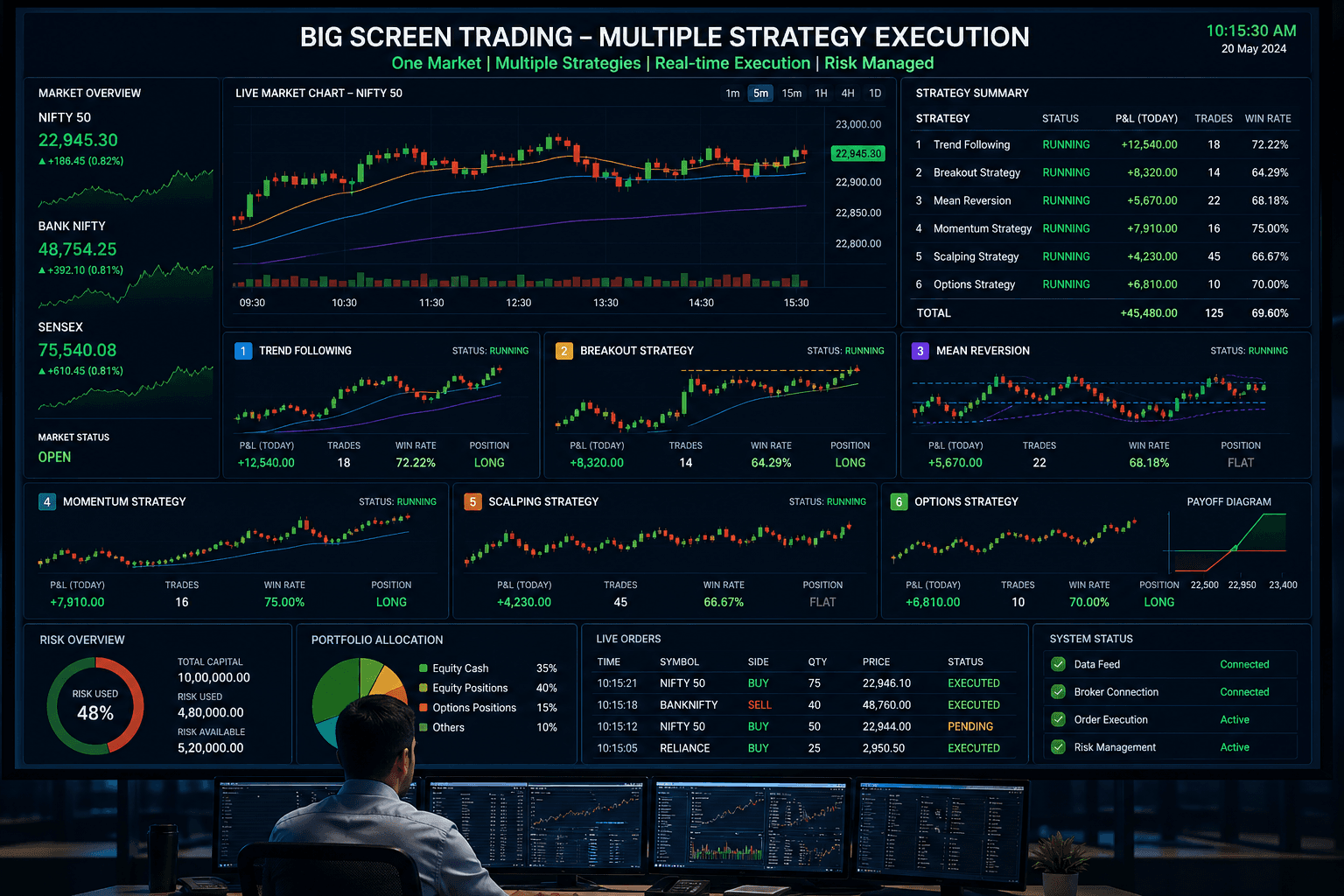
Every serious forex trader started somewhere — and for most, that somewhere was a small account. Maybe it was $100 scraped together from savings, or $300 set aside after months of reading about the market. Whatever the number, starting small is not a disadvantage. It's a training ground. It's where habits are built, where mistakes are made on a manageable scale, and where the foundations of real trading discipline are laid. The challenge with small accounts isn't the money itself — it's the psychology that comes with it. When every pip feels magnified and every loss stings harder, the temptation to over-leverage, over-trade, or chase the market grows stronger. That's precisely why having a clear, tested strategy isn't optional — it's essential. Whether you're working with $100 or $1,000, understanding how to read forex charts, applying the right indicators, and choosing timeframes that match your lifestyle can mean the difference between blowing an account in a week and building it steadily over months. In this guide, we break down the best strategies specifically designed for small forex accounts practical, proven, and adaptable for traders at every level.
Why Small Accounts Need a Different Approach
Trading forex with a small account isn't simply a scaled-down version of trading with $10,000. The math is different. The psychology is different. And the strategies that work at scale can destroy a smaller account in days if applied without modification.
With limited capital, your margin for error shrinks. A string of losses that a large account could absorb comfortably might wipe out 30–50% of a small account. That's why traders who thrive with smaller balances don't just copy what big traders do — they adapt their risk management, position sizing, and trade selection to fit the realities of their account size.
The good news? Small accounts have one major advantage: flexibility. You can test strategies, pivot quickly, and build experience without catastrophic consequences — as long as you're disciplined.
Strategy 1: Scalping on Short Timeframes
Scalping is one of the most popular strategies for small accounts, and for good reason. It involves making a high number of quick trades — typically lasting seconds to a few minutes — capturing small price movements repeatedly throughout the day. When done well, scalping can generate consistent daily gains without requiring large positions. Choosing the best timeframes for scalping is a crucial first step, as the 1-minute and 5-minute charts are the most common battlegrounds for scalpers.
For a small account, scalping works well because:
• You're exposed to the market for shorter periods, reducing overnight risk
• Small pip targets mean tighter stop-losses and more controlled risk per trade
• You don't need a large account to generate meaningful percentage returns
The biggest risk with scalping is overtrading. Executing 30–50 trades a day might sound productive, but without strict entry criteria, it becomes gambling. Pair scalping with a clean indicator setup and clear rules for when to enter and exit.
Strategy 2: Swing Trading with Support and Resistance
If you can't sit at a screen all day, swing trading is the small-account strategy you need. Swing traders hold positions for anywhere from a few hours to several days, targeting larger price moves within established market structure. The cornerstone of this approach is understanding support and resistance levels — the price zones where the market repeatedly reverses or stalls.
With swing trading, you're not chasing every pip. You wait for price to reach a key level, confirm with a signal (a pin bar, engulfing candle, or RSI divergence), and enter with a defined stop-loss. The risk-to-reward ratio matters enormously here. Aim for setups where you're risking 1 to make 2 or 3. Over time, even a 40% win rate with a 1:3 reward ratio produces substantial growth.
For small accounts, swing trading reduces transaction costs (spreads and commissions) compared to scalping, and it allows you to trade part-time without missing setups.
Strategy 3: Trend Following with Simple Indicators
One of the oldest truths in trading holds up: the trend is your friend. Trend-following strategies involve identifying a currency pair's directional bias and only entering trades in that direction. For small accounts, this means using reliable indicators for forex charts like the 20 EMA, 50 EMA, or the ADX to confirm trend strength before committing capital.
A simple trend-following setup for small accounts:
• Use the 4-hour or daily chart to identify the dominant trend direction
• Drop to the 1-hour chart to find pullbacks to key moving averages
• Enter when price bounces off the EMA with a confirming candlestick signal
• Set your stop below the swing low (in an uptrend) and target the previous high
This approach filters out the noise of lower timeframes while still offering frequent enough setups to keep small accounts active. It also keeps you aligned with institutional money flow — a critical edge when you're trading with limited capital.
Strategy 4: Risk-First Trading — The 1% Rule
No matter which strategy you choose, the 1% rule is the single most important principle for small account survival. It means never risking more than 1% of your account balance on a single trade. On a $200 account, that's $2 per trade. On a $500 account, that's $5.
This sounds painfully small, and that's exactly the point. The 1% rule keeps you in the game long enough to find your edge. A trader who risks 10% per trade can be wiped out by 10 consecutive losses — a streak that happens to every trader eventually. A trader using the 1% rule can sustain 50 losses in a row and still have more than half their capital.
Pair the 1% rule with a minimum 1:2 risk-to-reward ratio, and you only need to win 34% of your trades to break even. Win 50% and you're growing steadily. This is the mathematical foundation that professional traders build on — and it's the same foundation small account traders must respect.
Strategy 5: Choosing the Right Platform Matters More Than You Think
Even the best strategy fails if you're trading on a platform with high spreads, slow execution, or hidden fees. For small accounts, costs eat into profits disproportionately. A 2-pip spread on a micro lot trade might seem trivial, but multiply that across hundreds of trades and you're hemorrhaging capital. That's why choosing the right forex platform for your trading style isn't a minor detail — it's a strategic decision that directly impacts your bottom line.
Look for platforms that offer:
• Tight spreads on major pairs (EUR/USD, GBP/USD, USD/JPY)
• Micro or nano lot sizing, so you can properly control position size on small accounts
• Fast execution with minimal slippage
• A reliable demo environment to test your strategy before going live
Speaking of demo trading — don't skip it. Demo vs live trading platforms work differently in terms of psychology, but spending 4–8 weeks in a demo environment before committing real capital can save a small account from unnecessary early losses. Use demo trading as a sandbox for strategy refinement, not just a place to practice clicking buttons.
The Mindset Edge: Small Account, Big Discipline
Here's the uncomfortable truth: most small accounts don't fail because of bad strategies. They fail because of bad discipline. Traders abandon their rules when the market gets volatile. They double their position size after a loss to "make it back." They move their stop-losses hoping a trade will reverse.
The traders who grow small accounts into larger ones treat every trade like a business decision. They journal their trades. They review their setups weekly. They understand that a single bad week doesn't define a career — but a pattern of undisciplined decisions does.
The strategy you choose matters far less than how consistently you execute it. Pick one approach, master it, test it on demo, then deploy it on live markets with strict risk management. Boring, consistent, disciplined — that's what turns a small account into something worth talking about.
Final Thoughts
Small forex accounts aren't a limitation — they're a starting point. The traders who succeed with limited capital do so not because they found a magic formula, but because they treated their small account with the same seriousness a hedge fund manager treats a nine-figure portfolio.
Start with one strategy. Master your risk management. Choose the right platform. Read the charts properly. And remember — every professional trader was once a beginner with a small account and big ambitions. The difference is they stayed in the game long enough to learn.